03 April 2014

Women's march to Versailles


Women's march to Versailles

Above is the image of an event of the “October Days” also known as a the Women's march to Versailles. I chose this event because this week's topic is about the e
Enlightenment and French Revolution. This is a capped six months of women’s political involvement: their active presence in Paris neighborhoods, in electoral assemblies for the Estates General and in the conquest of the Bastille (BV). It’s the first revolutionary that we see women demanding citizenship rights for women. In this march, thousands are empowering themselves as citizens as they confront the national legislative and the king with demands: bread, royal ratification of the Declaration of the Rights of Man and of the government from Versailles to Paris (BV). What’s significant about this event is that these women acted like citizens. According to the authors Levy and Applewhite, “Through these practices, they forged a link between their identities and behaviors as citizens, on the one hand, and new concepts of popular sovereignty, citizenship, and political legitimacy, on the other- the touchstones of modern democratic practice (BV). Women who did not march to Versailles, did other participation such as signing or marking petitions, attending revolutionary meetings, and participating in neighborhood self-government (BV).  They also contribute by donating their jewels to the treasury, knitted stocking, made bandages for the armies, or joined revolutionary festivals (BV). The march to Versailles is just one event that women took charge of the Revolution. But as we know, women did not become citizens right away in fact it took many years later.


Sources:
Bridenthal, Stuard, and Merry Wiesner. Becoming Visible: Women in European History. Boston: Houghton Mifflin, 1998. Print.
images from Google

02 April 2014

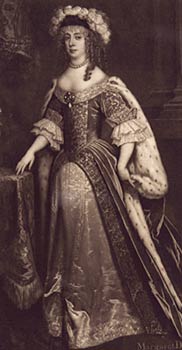
Madness or Brilliance? The Life and Work of Margaret Cavendish


      The prolific Seventeenth-century writer Margaret Cavendish has often been referred to as “Mad Madge.” This blog entry seeks to determine the degree of her eccentricity. Was she really off track in her writing or was she called mad because she was a woman who wrote about topics that were viewed as male only areas of expertise during her lifetime?

            Margaret Cavendish was born in Essex in 1623 to a wealthy family and received a privately tutored education. Because of her family’s wealth she was able to become a maid of honor to Queen Henrietta Maria and followed the queen to Paris after she was exiled. There she met her husband, the Duke of Newcastle, and they married in 1645 and returned to England. Cavendish never had children, and in 1653 she published her first book called Poems, and Fancies. She wrote on topics such as natural science and philosophy, and in 1666 she published Blazing World, which is now described as one of the oldest known science fiction works in the world.

            Perhaps the greatest support for her writing career came from her husband. He wrote this in the introduction to her book Observations Upon Experimental Philosophy:

“This book is book of books, and only fits

Great searching brains, and quintessence of wits;

For this will give you an eternal fame,

And last to all posterity your name:

You conquer death, in a perpetual life;

And make me famous too in such a wife.

So I will prophesy in spite of fools,

When dead, then honoured, and be read in schools.

And ipse dixit lost, not he, but she

Still cited in your strong philosophy.”

-William Newcastle

            Cavendish received many critiques by both her contemporaries as well as later scholars. Many of her colleagues did not take her seriously, although she made legitimate arguments. Also in her book she thoroughly discussed ideas from Aristotle, Plato, Epicurus, and Pythagoras. Something which also likely contributed to her colleagues dislike of her was the fact that she called them “botchers and brokers” who borrow and repeat ideas from past philosophers and do not give them the full credit they deserve. Cavendish was the embodiment of what many male intellectuals feared in the seventeenth-century if women were able to achieve the same education and academic status as the male elite. She was intelligent and unafraid to publish her own ideas in her own name, and also to debate and compare them to both past and present male intellectuals. She did not wait for women to be considered equal to men, she considered herself equal to her colleagues which makes her especially relevant to the study of women’s history.
     Below is an interesting excerpt from the same book quoted above in which Cavendish addresses gender issues and provides substance to the argument for her inclusion as an early feminist.
“I might set up a sect or school for myself, without any

prejudice to them: But I, being a woman, do fear they would soon cast me

out of their schools; for, though the muses, graces and sciences are all of

the female gender, yet they were more esteemed in former ages, than

they are now; nay, could it be done handsomely, they would now turn

them all from females into males: So great is grown the self-conceit of the

masculine, and the disregard of the female sex.”

 –(Observations Upon Experimental Philosophy, 249)

Sources:
Newcastle, Margaret Cavendish, and Eileen O'Neill. Observations Upon Experimental      Philosophy. Oxford: Cambridge University Press, 2001. eBook Collection (EBSCOhost),                        EBSCOhost (accessed April 2, 2014).


Jean Jacques Rousseau and His Brand of Misogyny

(This is the title page of Rousseau's work Emile, printed in 1792.)

This week I really wanted to discuss one of our readings, Emile by Jean-Jacques Rousseau. Since we are very limited in our fifty-minute classes, I decided that by delving into it for a blog post would get most of my reactions and feelings out about the reading. Obviously, the introduction gives some warning of the misogyny apparent in the text, but even I was surprised. In the beginning it sounds very similar to many other readings we have had from male authors concerning women, yet it gets worse quickly. Rousseau writes, “It follows that woman was specifically made to please man. If man ought to please her in turn, the necessity is less direct. His merit lies in his power; he pleases simply because he is strong,” (Emile). Now the first part of this quote is similar to most male authors, it is the second part that I read and actually laughed at. Apparently all men need to do in life is be strong and that pleases women, interesting.

As he continues in his analysis of what education is appropriate for women, he argues that women are stupid. Specifically, because of their desire to learn and “become like men” for if they were to do that, then men can resist women and truly rule over them. Also seemingly obvious, there is nothing in existence that is preventing these women from teaching their daughters to become men; it is obviously the fault of the mothers from not giving their daughters the education. In his conclusion, he sums up his stance completely by writing, “Thus, the whole education of women ought to be relative to men. To please them, to be useful to them, to make themselves loved and honored by them, to educate them when young, to care for them when grown, to council them, to console them, and to make life agreeable and sweet to them,” (Emile).  So for young women looking to get an education in anything related to real subjects instead of just being a good tool for a husband, Rousseau believes this is not an appropriate desire, for women are just meant to be shiny objects that husbands can parade around as another trophy they collected.

27 March 2014

Lavinia Fontana

In our class today, our group played the Bolognese artist Lavinia Fontana (1552-1614). So I did a little more research about her paintings and I realized I really enjoy her different style of work. As Dr.Wolbrink showed in class one of her well recognize paintings is the Chess Game, Fontana paints her sisters along with their servant representing their status and wealth. But what really intrigued me was how the artist paints most of her clients looking directly at the artist or “you” the audience. Here are some examples:
The Chess Game
The Madonna and Child with a Donor 

The Madonna and Child with a Donor painting is different from her Chess Game because in this one we don't have the servant or "Donor" looking at the child instead he is looking at the artist. 

In this painting, we see Fontana capturing infidelity and wealth of this family. We know she is portraying infidelity because of the children and the dog in the mother's arms. They are also looking at us or the artist from all different angles and perspective. 


Sources: images on Google

26 March 2014

Properzia de'Rossi: Exceptional Artist

    The epitaph for Properzia de'Rossi reads "The bold splendor of two beautiful eyes would have progressed assuredly from marble statue to many sculptures. But it is new and strange cause for amazement that now, alas, envious death has taken the delicate hand, which, only a little while ago, made rough marbles live." Art Historian Catherine King argues that this epitaph captures how female artists were viewed as subordinate to male artists, even after death. She supports her argument with the fact that the author of the epitaph focused more on her beauty and delicacy as a woman than on her career as an artist. This epitaph gives substance to the debate over women's status during the Italian Renaissance and their public as well as private roles. Many modern women would be flattered with an epitaph that called them beautiful, however they would probably not like it if that was the only thing said about them, overshadowing their career or family.
      As noted by Caroline P. Murphy in "The Economics of the Woman Artist," de'Rossi's career was amazing. Records reveal that in 1526, the sculptor received her final sum from the Church of San Petronio for her artwork that had been commissioned a few years earlier. She was payed a comparable sum to that of male sculptors. This fact tells historians that one, it was possible for women to have public lives and to have similar careers to men during this period of time in Italy. It also pays tribute to the talent of de'Rossi who was obviously a highly sought after artist because she was commissioned by one of the most important churches in Bologna, above her male peers. Murphy attributes de'Rossi's public life and role as a female artist as also her ultimate demise because her career has been overshadowed by her death around age forty at a syphilitic hospital and her several run-ins with the law. Murphy states that de'Rossi became an artist out of necessity and she probably developed an aggressive demeanor which was necessary to make money, but also landed her in trouble when colleagues accused her of "disturbing the peace and assaulting a male colleague" (Murphy 23).
      Not much is actually known about de'Rossi's personal life, only records that attest to her public life such as court records and her sculptures remain. Historians estimate that she lived from about 1490 to 1530. In 1550, attesting to her artistic talent, Giorgio Vesari included her short biography in his book Lives of the Most Eminent Architects, Painters, and Sculptors of Italy, in which she was the only woman honored. Later, Vasari would include other female artists in his books. It is also known that d'Rossi trained at the University of Bologna with a master sculptor, and that she did not come from a family of artists, which makes her even more exceptional as woman and a female artist of this time. Below is her most famous sculpture, Joseph Fleeing Potipher's Wife as well as a portrait of Properzia de'Rossi.


image
Unknown artist, Portrait of Properzia de Rossi, ca.1530. Bronze medal. 1/3 x 1/3 inches (0.8 x 0.8 cm). The British Museum, London, England. Courtesy of The Warburg Institute, London, England


Sources:

King, Catherine. "Looking A Sight: Sixteenth Century Portraits of Women Artists." Zeitschrift fur               Kunstgeschichte 58 (1995): 381-406.

Murphy, Caroline P. "The Economics of the Woman Artist." Course Packet for History of European Women.

"Properzia de'Rossi." Clara Database of Women Artists. National Museum of Women in the Arts. http://clara.nmwa.org/index.php?g=entity_detail&entity_id=13689.

Elisabetta Sirani

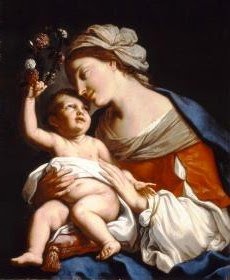
Elisabetta Sirani  was born in Bologna in 1638, a city well known for being progressive concerning women's rights, and was running a workshop alone and was an independent painter by the age of 19. Not only did she support herself and her family, she also taught and fostered the talent of dozens of other women artists, including her two younger sisters. She was well-known in her time, especially for her ability to quickly paint works, and often painted large pieces in front of large and adoring crowds of people. Elisabetta painted a variety of subjects, self-portraits and scenes from mythology, but some of her most famous works were of the Holy Family and the Virgin and Child.
 Below is one such work, "Virgin and Child" painted in 1663, where she portrays Mary in the style of the Bologna peasant women. She also often portrayed strong women in her works, below is her work "Judith with the head of Holofernes" and one portraying Timoclea of Thebes. Who it is said that after being raped by invading Thracian's in Thebes, Timoclea tricked the Thracian captian and then pushed him into a well.


http://www.bernheimer.com/node/1892
http://www.nmwa.org/explore/artist-profiles/elisabetta-sirani
http://art.thewalters.org/detail/9874/judith-with-the-head-of-holofernes/
http://womeninthearts.wordpress.com/2009/12/23/artist-spotlight-elisabetta-sirani/

Elisabetta Sirani - The Woman Who Used Shadows

(This is Elisabetta Sirani in her Self-Portrait in 1658 at the age of twenty.)

The female artist I chose to write on this week is Elisabetta Sirani. She lived during the 17th century, and died at only twenty-seven. Yet by the time, she was nineteen she worked as a painter, in her work she supported her whole family, because her father had gout and could no longer support them. Like Lavinia Fontana, she lived in Bologna, where she painted, and received patrons such as the Grand Duke Cosimo III de Medici. Although we have not mentioned the Medici family much in class, they were a very powerful banking family in Italy with many connections to famous artists who functioned as their patrons. Before her death, Elisabetta taught other young women to paint, including her two sisters and more young women from the area.


As for her painting style, Elisabetta painted in the Baroque style, using details as well as dramatic lighting on her subjects. People would come to watch her paint, even in large audiences because her skill and speed were both noted regularly. Scholars estimate that she painted around 200 paintings in her short life. Three common topics of her paintings were self-portraits, Judith with the head of Holofernes, and the Virgin and Child. Her paintings of the Virgin and Child show the importance of the love between Mary and the Christ-child. She presents Judith in a powerful stance showing her strength as well as her femininity by the choice of clothing. Finally, in her self-portraits she shows herself in women’s dress, but also is quick to place herself with the tools of her trade.

All information came from:
http://www.nmwa.org/explore/artist-profiles/elisabetta-sirani